Welcome to Nakataymiihtowiin. We are grateful for your interest in learning more about the people behind this work.
Our research team brings together Métis scholars, graduate student researchers, community members, and partners who share a commitment to advancing Métis wellness through respectful, community-driven research. We believe that meaningful research begins with relationships and is grounded in listening, reciprocity, and accountability to the communities we serve.
This project is guided by the experiences, knowledge, and priorities of Métis communities. Our team is committed to creating research processes that are culturally safe, collaborative, and responsive to the needs and voices of Métis people. We recognize that wellness is holistic, encompassing physical, emotional, mental, spiritual, familial, and community well-being.
Nakataymiihtowiin is being conducted using a Wahkohtowin theoretical framework and the intertwining Michif methodology (IMM) that combines the Keeoukaywin (Visiting), Lii Taab di Faam Michif (Kitchen Table Conversations), and Kishkeeyihtamaaniwan Kaanatohtamihk methodologies.
Throughout the project, we will work alongside community members to ensure that the research remains relevant, respectful, and beneficial. We are committed to sharing what we learn in accessible ways that support communities, organizations, and future initiatives.
On the following pages, you can learn more about each member of our research team, including their backgrounds, roles within the project, and the perspectives they bring to this work. Together, we are honoured to contribute to research that supports the strength, resilience, and wellness of Métis people and communities.
We invite you to get to know the people supporting this project.
Dr. Lucy Delgado, Principal Investigator
Dr. Laura Forsythe, Principal Investigator
Dr. Michelle Driedger, Co-Investigator
Dr. Heather Foulds, Co-Investigator
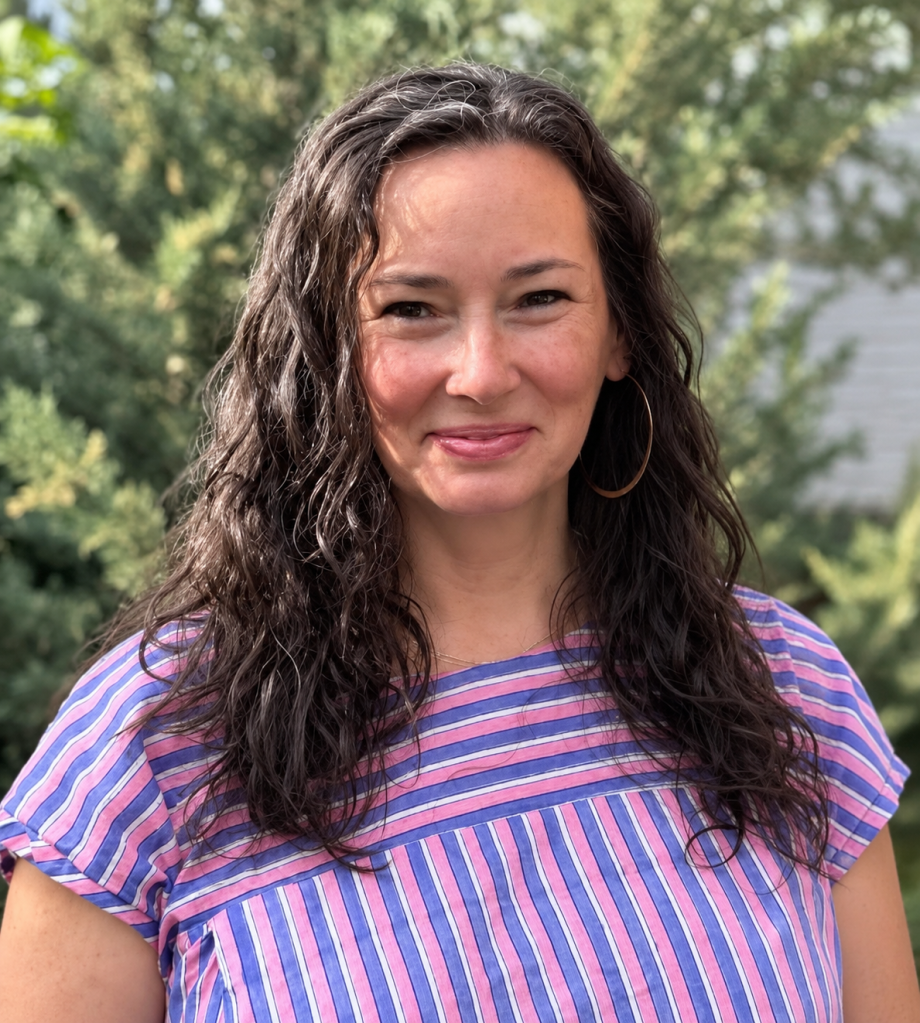
Dr. Robbi Davey (Research Associate)
Robline Davey is an educator whose research interests lie in the intersections of educational technology, learning design and Métis experiences. Her SSHRC funded doctoral research examined Métis feminisms, Métis methodologies, Métis women’s experiences with marginalization, and how resulting self-concepts have shaped access to and engagement with post-secondary education.
Robbi is a citizen of Métis Nation British Columbia, residing in Kamloops which is in Secwépemc territory. Her maternal grandparents are from St. Norbert, St. Vital, St. Boniface and St. Pierre Jolys, migrating to BC for economic opportunity in 1950s with their children. Her settler roots are from her father whose English and Belgian ancestors settled in Saskatchewan and Manitoba. Growing up in BC, Robbi is engaged in an ongoing pursuit to re-build cultural traditions with connections to kin, scholarship and through past volunteer work as an elected board member supporting her local Métis community. Her Métis family names include Charette, Roy, Nault, Gaudry, Lagimodiere, Rochelau, Landry, Morand, Delorme, Lalonde, Gosselin, Lafreniere, and Dease with scrip records, river lots and connections to the Red River settlement.
Current Research Assistants
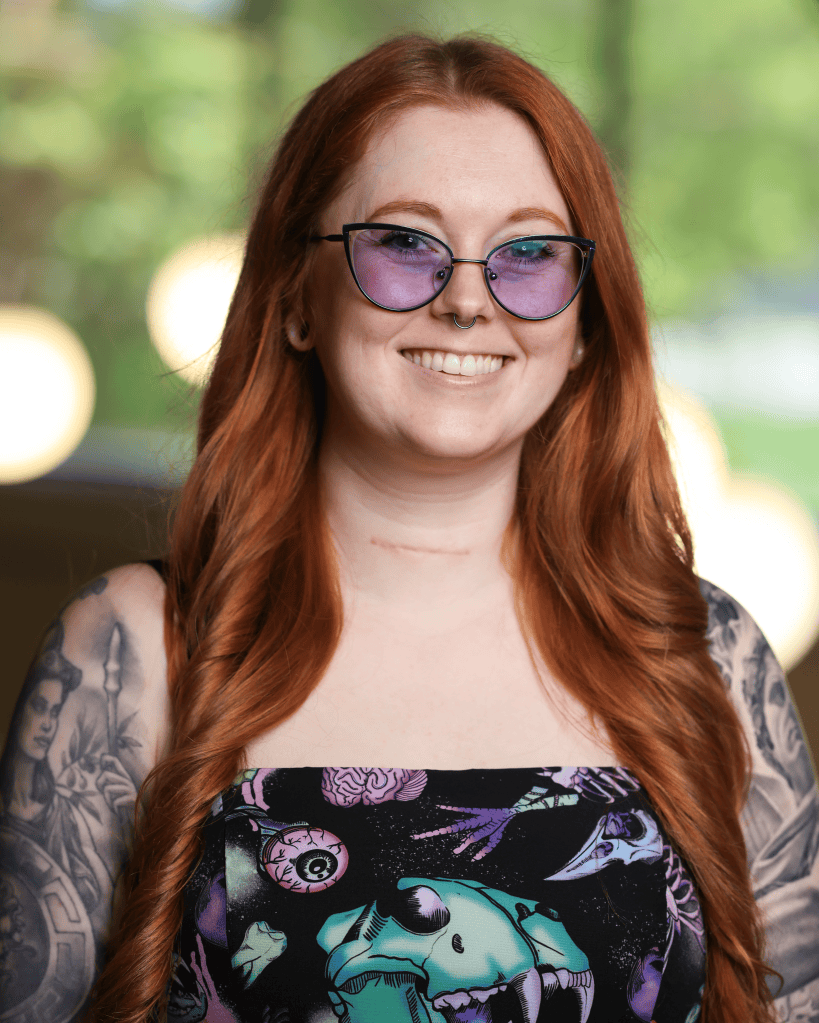
Paige Boyd
I am a Métis scholar, recipient of a SSHRC Canada Graduate Scholarship (CGS-D), and PhD student in the Faculty of Education at the University of Manitoba under the supervision of Dr. Lucy Delgado. My academic journey has taken me from Political Science to Classics and now Education, with each stage deepening my interest in how knowledge is produced, how historical authority becomes established, and how carefully curated understandings of the past come to shape the present.
My master’s research in Classics examined Roman historiography, exploring how particular interpretations of the ancient world came to be accepted as historical truth through centuries of scholarly transmission and reinterpretation within the academy. As I traced the afterlives of these narratives beyond antiquity, I became increasingly fascinated by how they continued to acquire authority across successive generations of scholarship and, in doing so, extended their influence far beyond the ancient world. The enduring authority afforded to particular interpretations of Greco-Roman antiquity within European intellectual traditions led me to consider how those interpretations were carried forward through generations of scholarship and became woven into the intellectual foundations of colonial education and knowledge production within the Western academy. These questions ultimately led me beyond the study of historiography to ask how educational institutions continue to shape what comes to be recognized as legitimate knowledge in the academy.
This work now continues through my doctoral research in Education, where, drawing upon decolonial and Indigenous perspectives, I explore how the academy continues to determine what is recognized as legitimate knowledge and whose ways of knowing are afforded authority. Rather than treating Indigenous knowledges as perspectives to be incorporated into existing educational systems, my research considers how Indigenous ways of knowing and ways of being invite us to reconsider the philosophical and epistemological assumptions that have long shaped research, teaching, and scholarship. In particular, I am interested in how educational institutions continue to inherit colonial frameworks shaped by imperial histories, and how Indigenous methodologies open possibilities for more relational, accountable, and community-grounded approaches to knowledge.
Contributing to this Métis-led project represents an important opportunity to continue exploring these questions through Nation-specific Métis research grounded within Métis homelands, perspectives, and experiences. Learning alongside Métis scholars, Elders, Knowledge Keepers, and community members will further develop my understanding of research that emerges from relationships with community and remains accountable to the distinct histories, priorities, and lived realities of Métis people. As someone continuing my own journey of reconnecting with my Métis identity and embracing my identity as a Two-Spirit person, this work also holds deep personal significance. I look forward to meeting everyone at the Gathering, contributing to the project, building meaningful relationships, and learning from the knowledge and experiences shared throughout Métis communities.
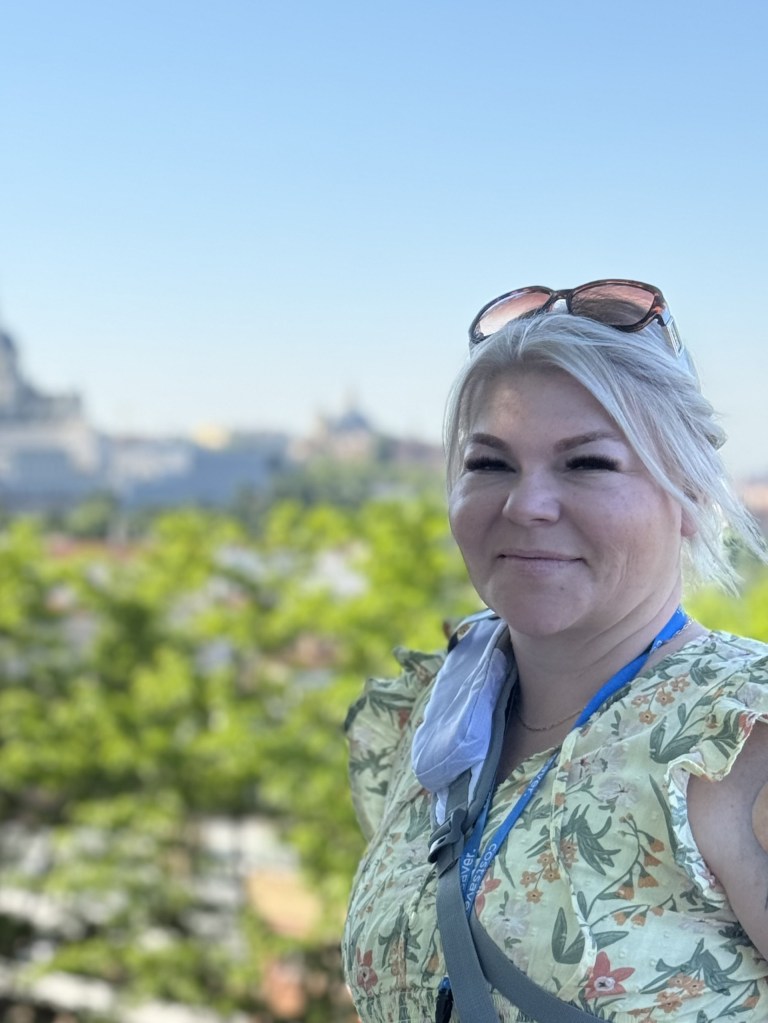
Stephanie Brown
Stephanie Brown, MISW, RSW, is a Métis counsellor, educator, and doctoral candidate in Indigenous Education at the University of Regina/Gabriel Dumont Institute. She resides in Saskatoon, Saskatchewan, on Treaty 6 Territory and the Homeland of the Métis. Her work is rooted in Métis ways of knowing, relational accountability, and the belief that wellness is cultivated through community, kinship, culture, and belonging.
With experience in post-secondary education, clinical counselling, and community-engaged research, Stephanie is committed to creating culturally meaningful spaces that honour Indigenous knowledge and support individual and collective wellness.
Her doctoral research explores how Métis women’s teachings, gathering spaces, and relational practices contribute to identity, belonging, and wellness within post-secondary institutions. Through her teaching, counselling, and research, Stephanie is passionate about advancing Métis-led approaches that strengthen cultural continuity, foster reciprocal relationships, and support future generations of Métis learners and communities.
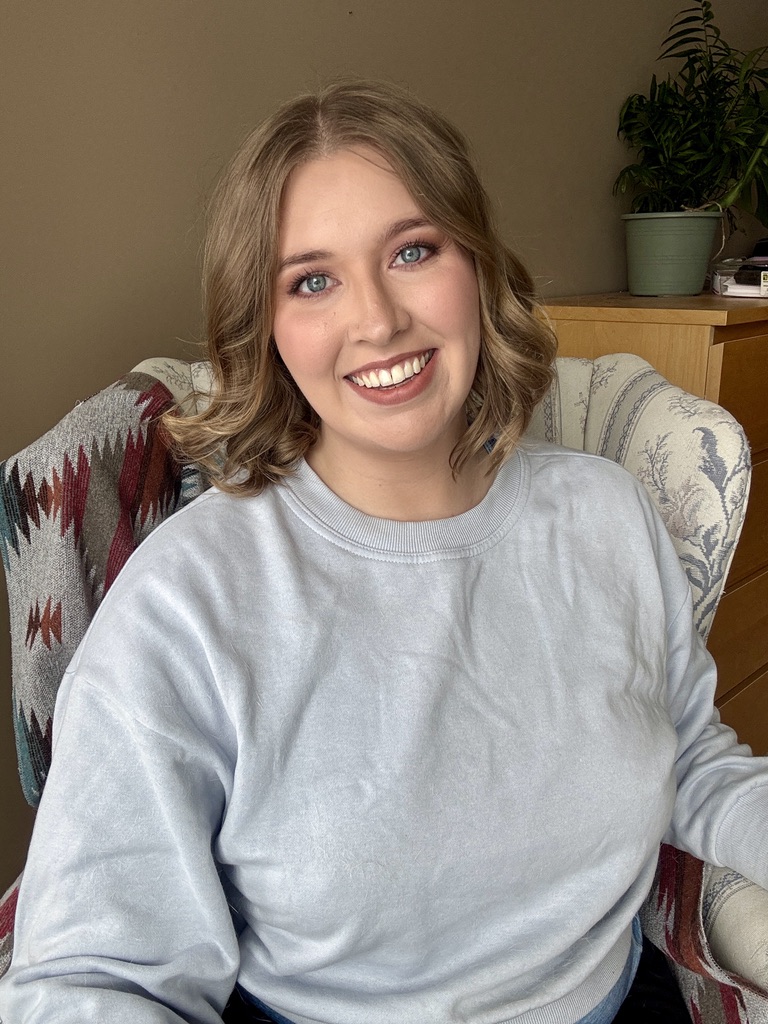
Danielle Houle Sanford
Danielle Houle Sanford (Wapi Kihew Iskwew, White Eagle Woman) is a queer Red River Métis researcher and citizen of the Métis Nation of Alberta. She was born and currently lives in Calgary on Treaty 7 Territory. Her ancestral family lines include Houle, Callihoo, Ross, and Amyotte, with roots throughout the historic Métis Homeland, including Lac Ste. Anne, Paddle Prairie, St. François Xavier, and Turtle Mountain.
She is the fourth great-granddaughter of Chief Michel Callihoo, who signed Treaty 6 by adhesion in 1878 on behalf of the Michel First Nation. Danielle is also the grand-niece of Bertha Clark-Jones, a founding member of the Native Women’s Association of Canada, an Officer of the Order of Canada, and a lifelong advocate for Indigenous women’s rights.
Danielle is nearly finished her Master of Counselling at Athabasca University. Her thesis, Culture is Medicine: Métis Cultural Reconnection and Relational Healing, examined how cultural reconnection shaped her health across the mental, emotional, physical, and spiritual dimensions of well-being. Through this work, she developed the Métis Reconnection Methodology, a new Métis-specific methodology that combines the autoethnography method with Métis ways of knowing.
Danielle also created the original Relational Systems Model of Cultural Reconnection and Métis Well-being, which traces the mechanism and relational processes underlying the personal healing that took place as she reconnects with Métis culture. Danielle’s research offers new theoretical and practical contributions to understanding the relationships between cultural reconnection, identity, and holistic health. Her research is grounded in Métis ways of knowing, Indigenous feminism, relational accountability, and the belief that culture is medicine.
Danielle’s research focuses on Métis health, cultural continuity, identity, Indigenous research methodologies, and decolonizing approaches to health promotion. She is particularly interested in how cultural reconnection influences the health of Métis women, Two-Spirit, and Indigiqueer people. She is committed to developing culturally aligned approaches to counselling and health care. Danielle is passionate about producing research that is relevant to the community and that supports stronger Métis-specific health services, policies, and programs.
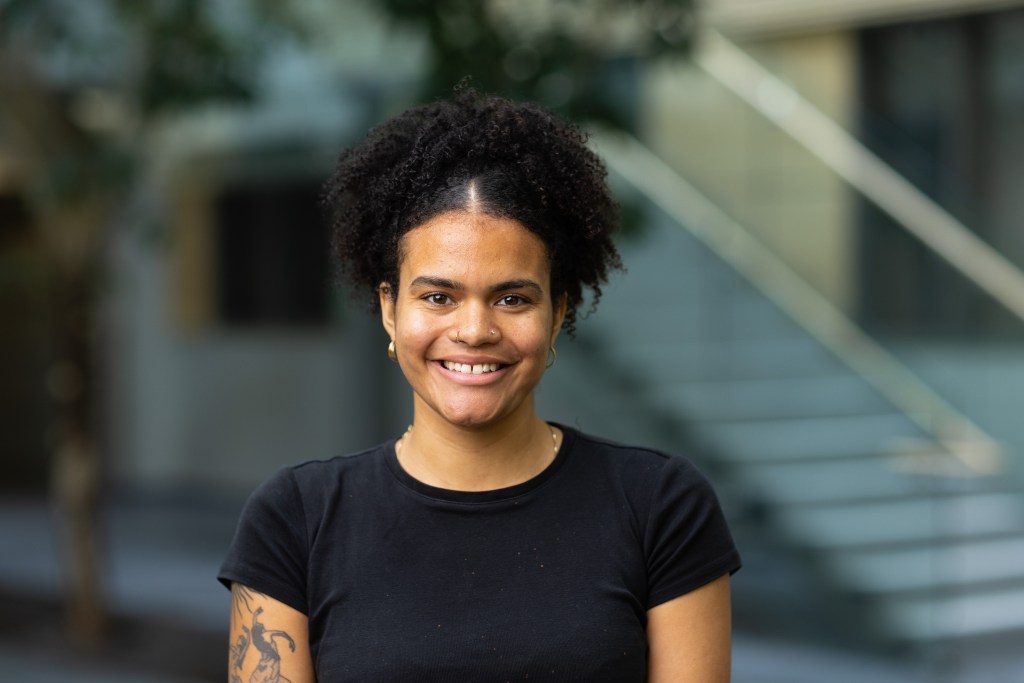
Maya Tighe
Born and raised in Winnipeg, Manitoba I am currently is situated within the homeland of my ancestors, the Red River Métis. My family comes from Sagkeeng, St Francois-Xavier and St. Adolphe with my family names including Delorme, Lesperance and McDougall. I am currently pursuing a Master of Science at The University of Winnipeg with a focus on highlighting the impact early life exposure to a maternal high fat diets has on our hunger and satiety cues.
Growing up as a black presenting Métis person, I struggled to try and find where I fit in and felt the trap of having to pick one identity to associate with. Coming to the University of Winnipeg in High school I had the opportunity to embrace and explore more of much more of my Métis heritage as well as learn and live the teachings of my people.
For my project I will be exploring the experiences of black presenting Red River Métis individuals. Listening and sharing our stories together, I am really excited to hear about the different experiences that people have had and where it has led them to today. Outside of academia, I love to run. I am still working on finding hobbies and maintaining a better work life balance but for now I seemingly find some solace in running.
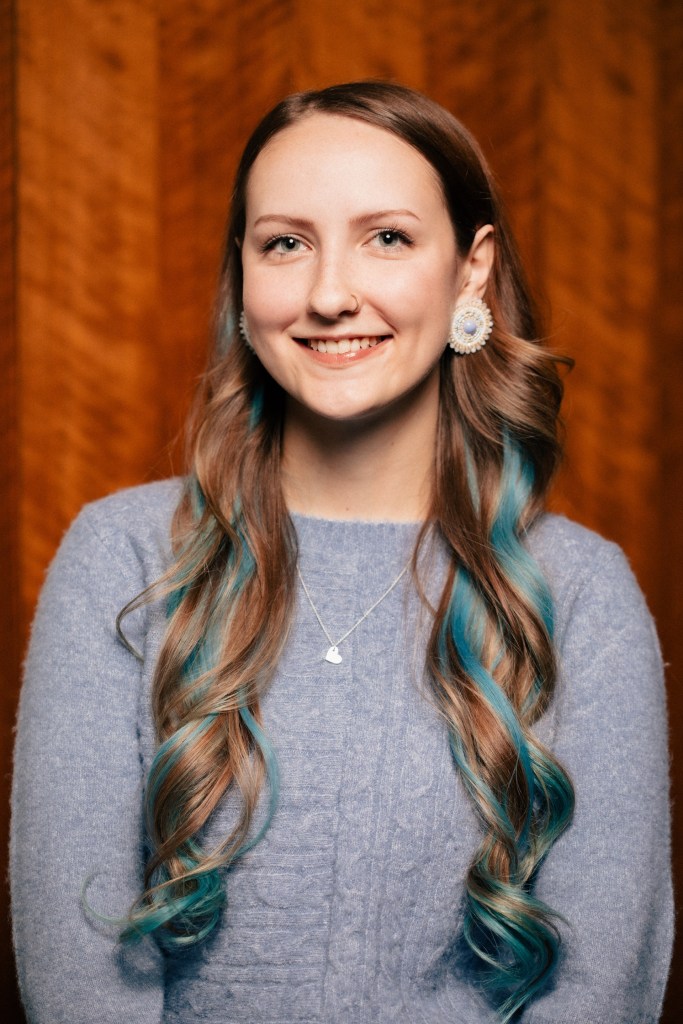
Katie Tolley
Katie Tolley is a Métis PhD candidate in Public Health at the University of Saskatchewan, with family names including Boyer and Gariépy. She grew up in Prince Albert, Saskatchewan, and now lives in Warman with her partner and their four pets. Her doctoral research sits within a larger CIHR-funded initiative developing culturally appropriate sexual health and wellness materials for teachers to use in the classroom.
Building on that work, Katie’s doctoral research uses digital storytelling with teachers alongside a policy review of Saskatchewan’s Parents’ Bill of Rights, examining how the policy shapes students’ access to health information and the conditions for safe, equitable learning environments.
Her doctoral work is supported by the CIHR Canada Graduate Research Scholarship and the Lieutenant Governor’s Indigenous Scholarship. Alongside her studies, Katie hosts and organizes the Tea & Talks series for Métis Nation–Saskatchewan, creating space for community gathering and knowledge sharing. Katie is also a research assistant on The impact of Métis-specific spaces on the health and wellness of Métis women and Two-Spirit Indigiqueer people. Beyond her academic and community work, Katie runs Designs by Katie, a small creative business rooted in Métis community and craft. Working across sewing, beadwork, and digital art, she shares beading patterns and tutorials so that others can learn as well. These practices keep her connected to Métis culture and to the community her research serves.
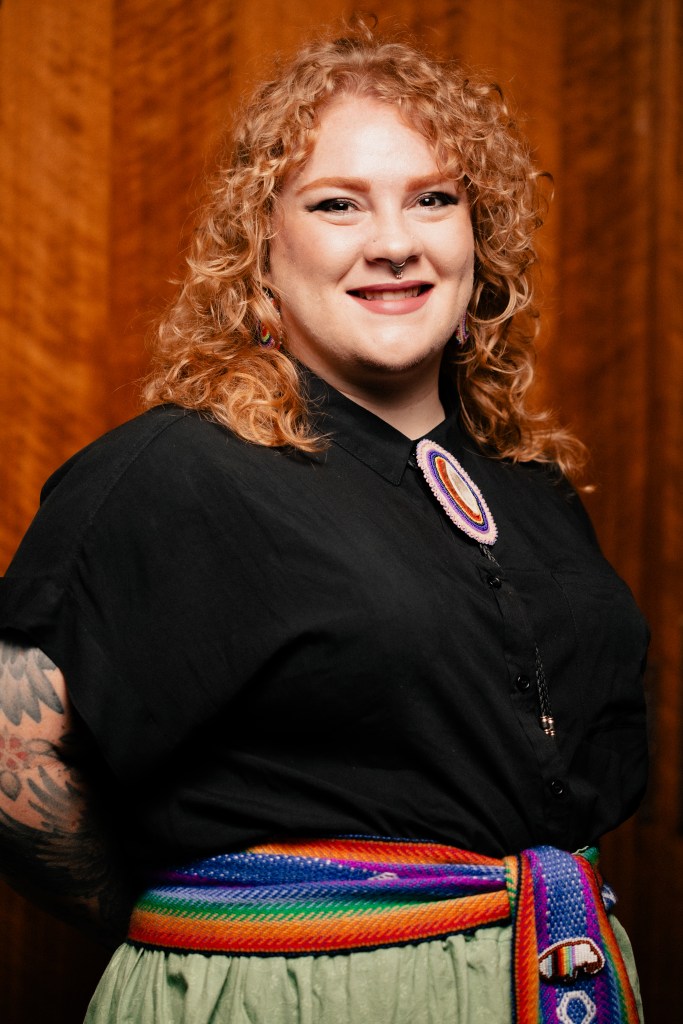
Lydia Toorenburgh
Lydia Toorenburgh (they/them) is a Two-Spirit Bungi-Metis and settler person living on Lekwungen territories in Victoria, BC. Lydia is a PhD student and Vanier scholar studying anthropology and Indigenous Nationhood at the University of Victoria.
In their doctoral research, Lydia is working with 2SLGBTQIA+ Metis community members to co-produce creative audio-visual projects that celebrate our stories, knowledges, and joy to contribute to the resurgence of 2SLGBTQIA+ Metis teachings, community roles, and cultures of acceptance in our nation. Outside of academia, Lydia is also involved in Two-Spirit and Indigiqueer ceremony and leadership at the regional, provincial, and national level.

